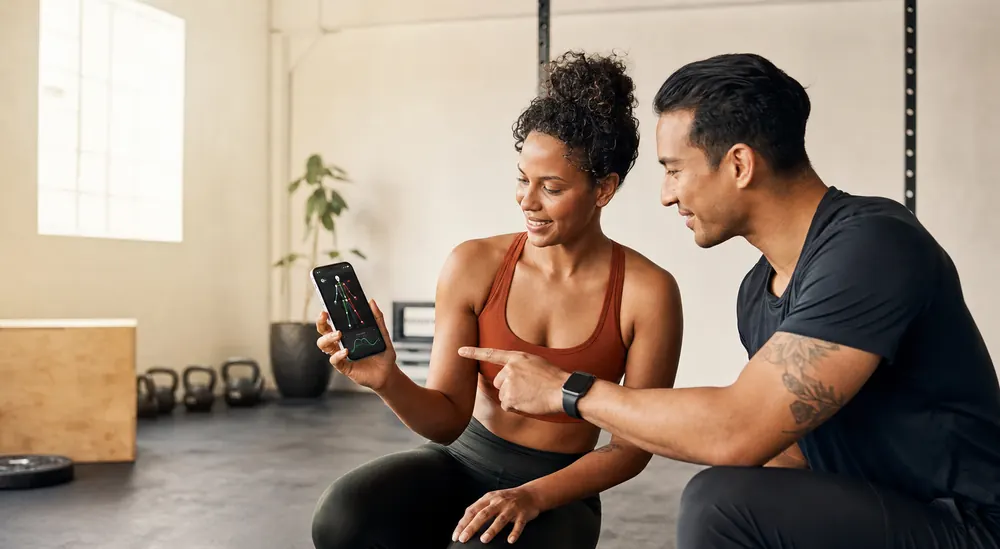
Computer vision as a coaching assistant
Video review becomes slow when every clip starts from a blank screen. ScoreRep organises visible movement information into reps, criteria and key frames so a coach can begin with a consistent structure.
The tracking method estimates pose landmarks, segments repetitions and applies criteria defined for the selected exercise. The coach remains responsible for interpreting the result because training goal, load, injury history and athlete experience are not fully visible to a pose model.
Make progress easier to discuss
Athlete history makes it possible to compare repeated analyses of the same exercise. Instead of saying that a movement feels better, athlete and coach can inspect the result and decide whether the recording conditions were comparable.
- Exercise-specific result history
- Score change between analyses
- Shareable analysis views
- Visible criteria and limitations
Suitable for personal trainers and remote coaching
A remote athlete can record a supported set and share the result before a coaching call. That gives both people a common piece of evidence and reduces the time spent locating the relevant moment in a long clip.
A personal trainer can use the same workflow between sessions: ask for a consistently framed set, review the original movement alongside the result and reserve coaching time for the decisions that require human context.
Where the analysis stops and the coaching starts
The boundary matters more than the feature list, because a tool that blurs it produces confident answers to questions it cannot answer. ScoreRep reports what was visible in the movement. Everything that depends on the athlete rather than the frame stays with the coach.
| Question about the set | What the analysis answers | What the coach answers |
|---|---|---|
| Did the rep meet the range? | Yes, against the criteria defined for that movement, at the frame where each is decided | Whether that range is the right target for this athlete, on this day, under this load |
| Did quality drop across the set? | Yes, as criterion results and timing rep by rep | Whether to stop the set, hold the load, or accept the drop as part of the session |
| Is the athlete ready for more? | Partly, by comparing analyses recorded under comparable conditions | Yes, with training history, sleep, soreness, competition calendar and intent |
| Why does the movement look like that? | It reports the position, not the cause | Mobility, motor control, load, fatigue, cueing — and a clinician where the answer needs one |
| Does something hurt? | Nothing. Pain is not visible in a pose | Yes, by asking, and by knowing when to refer |
A coaching review, step by step
The workflow is deliberately short, because a review process with more than four steps does not survive a busy week. It works the same way for an athlete in the room and for one training three time zones away.
- Agree the camera position once, mark it, and keep it for every recording of that movement — comparability between sessions is decided here, not in the software.
- The athlete records one clear working set and runs it through the matching movement.
- You open the result and read the criteria that failed, then check those frames against the original video rather than taking the score at face value.
- You decide what changes: load, cue, range, or nothing. The result becomes the reference point for the next recording of the same movement.
- Set the camera position first — it changes more results than any other decision.
How ScoreRep compares with other review workflows
Manual video review offers the richest human context but takes time to scrub and annotate. Wearables can measure selected motion signals but add hardware and do not show what the camera saw. Generic workout logs preserve sets and loads but do not organise visible movement evidence.
ScoreRep sits between those workflows: phone-only counting and movement-specific review provide a structured first pass, while the coach keeps responsibility for programming, interpretation and athlete care.
- Phone camera only; no wearable or dedicated camera required
- Original movement remains available beside the structured result
- Explicit uncertainty when the camera cannot support a criterion
- Human coaching judgement remains the final decision
Product evidence before endorsements
ScoreRep does not publish anonymous testimonials or unverified performance claims. Coaches can test a known clip without an account, inspect the methodology and compare the count with their own review before deciding whether the workflow is useful.
Named customer stories and quotations will only be published with permission and enough context to make the claim checkable.